Microphones
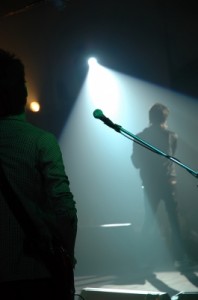 Microphones are the first step in making a singer or instrument heard in a large venue. You need to know what they do, how they do it and how different ones are used for different sound sources.
a) Dynamic and condenser microphones
Find out about ‘dynamic‘ and ‘condenser‘ microphones. Explain how they work – they both make an electrical signal but they do it differently to one another.
Try to explain:
- why dynamic mics are used for most on-stage applications (condenser mics are mostly used in recording studios)
- what particular applications condenser mics are used for on-stage
b) Polar patterns
A microphone’s polar pattern describes how it will respond to sounds coming from different directions. From wanting to pick up the instrument you’re pointing the microphone at, or you want to pick up all the sounds in the room, there’s a polar pattern that will be best for each application.
Find out about at least three different polar patterns (including cardioid and omnidirectional). Show a diagram of each pattern, explaining what it means and what it would be useful for. Include an example of a microphone with each pattern (e.g. Sennheiser E845 is a supercardioid microphone).
c) (OPTIONAL) Frequency response curves
Microphones all respond different to sounds, so the same source might sound clearer or more bassy depending on what microphone has been used. Some are even designed to hardly pick up certain frequencies – e.g. the Shure Beta 52 is designed to sound good on bass drums and bass guitar amps. For each of the microphones you found out about in part b), find the response response curve and compare it to the others to predict how it might sound.